Hot Water Tank Leaking? Find the Source and Know When to Replace It
· By Ed Ferreira
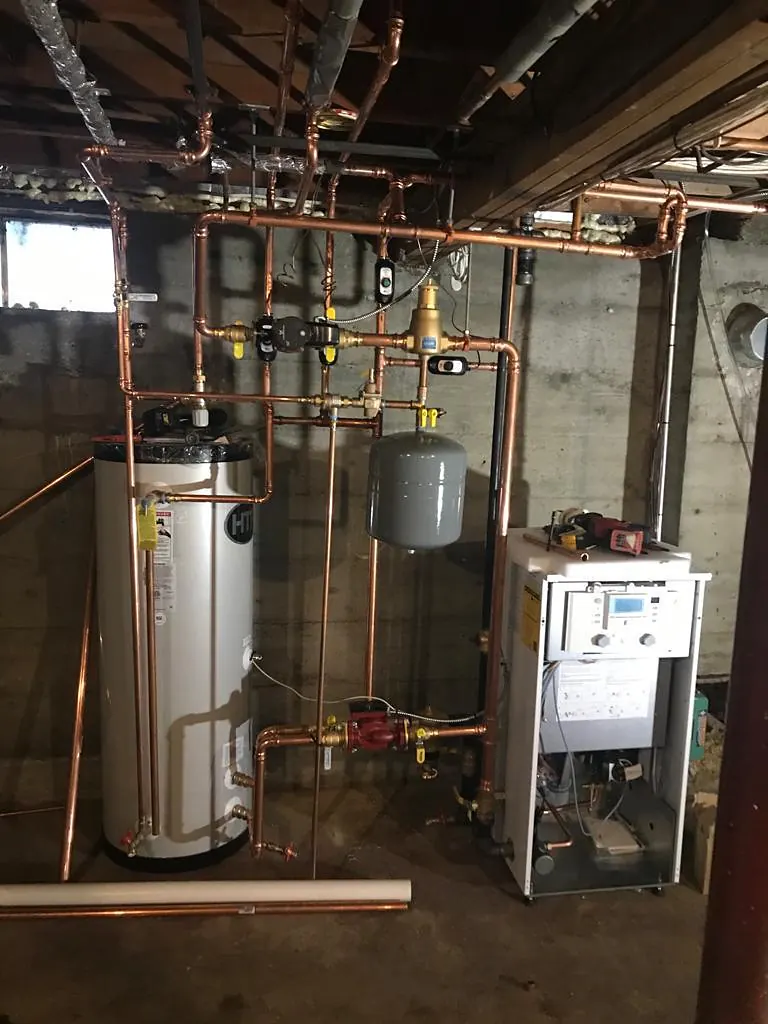
You open the utility closet and the floor is wet. A hot water tank leaking feels urgent and confusing at the same time.
Plenty of leaks come from fixable parts, like a loose fitting or a drain valve that will not seal. Others mean the tank has rusted through, and no patch will hold that.
Here is what to do first, how to find the real source, and how to tell a repair from a replacement.
First 10 Minutes: Make It Safe Before You Investigate
Start by stopping new water from entering the tank. Find the cold water shut-off valve on the pipe that feeds the top of the heater and turn it clockwise until it stops. If the handle is stiff, do not force it; old valves can snap. Shut off the main water valve instead.
Next, cut the heat source. On a gas tank, set the control knob to Pilot or Vacation as your owner manual describes, which stops the burner from firing. On an electric tank, switch off the dedicated breaker in the panel. Never touch the burner, gas line or wiring.
Then move boxes and anything plugged in away from the water and lay down towels. If you smell gas at any point, leave the home and call the FortisBC 24-hour emergency line at 1-800-663-9911 from outside.
One thing to leave alone: the temperature and pressure relief valve (the T&P valve, usually on the side or top with a pipe running down). The water behind it is scalding and under pressure, so do not lift its lever.
Trace the Water From the Top Down
Water always runs downhill, so a puddle at the base does not prove the bottom is leaking. Dry the tank and floor, wait a few minutes, then check for fresh moisture starting at the highest point.
At the top, look at the cold inlet and hot outlet connections, the shut-off valve, and any flexible connectors. A slow drip up there can run down the jacket and make a small fix look like a big failure.
On the side, check the T&P valve and its discharge pipe. Water at the end of that pipe means the valve opened or is not sealing. That could be a worn valve, or a sign of high pressure or overheating that needs a proper diagnosis.
Near the bottom, look at the drain valve. A dribble from its spout or threads is usually a valve problem, not a tank problem. If the water seems to come from under the outer jacket or from the seam where the tank meets its base, that is the warning sign you do not want to see.
Condensation or a Real Leak?
Gas tanks can sweat, especially after back-to-back showers on a damp Metro Vancouver morning. Cold incoming water chills the steel, and moisture from combustion condenses and drips down.
Condensation tends to show up after heavy use and fade once the tank is back to temperature. A true leak keeps going no matter what. If the floor stays dry after a few hours of normal use, condensation was the likely culprit. If water keeps returning, treat it as a leak.
Rust around the vent or soot near the burner opening needs a professional look. In BC, gas appliance work is regulated by Technical Safety BC and must be done by a licensed gas fitter.
When a Repair Makes Sense and When It Does Not
Repairable leaks usually involve parts bolted onto the tank. A loose or corroded fitting, a worn flexible connector, a leaking drain valve, or a faulty T&P valve can often be replaced without touching the tank itself.
A leak from the steel tank is a different story. Tanks rust from the inside out, often after the protective anode rod is used up and sediment has built up along the bottom. Once water escapes through the tank wall, there is no reliable repair. Sealants do not hold against heat and pressure.
Age matters too. Many tank water heaters last somewhere around 8 to 12 years, though water quality, maintenance and usage can push that up or down. The manufacture date is usually on the rating label. If an older tank needs a costly part, replacing it may be the smarter use of money.
What changes the cost of a replacement: tank size, gas or electric, venting requirements, how easy the space is to reach, permit and code updates, and haul-away of the old unit. A free estimate is the only honest way to get a real number for your home.
Tank or Tankless When It Is Time to Replace
A failed tank is a natural moment to ask whether a tankless heater fits better. Tankless units heat water on demand, take up less space, and avoid the standing tank that can rust through.
The trade-off: installation can need new venting, a larger gas line or electrical upgrades, and the upfront cost is usually higher. A like-for-like tank swap is often the faster way to get hot water back.
Condos, Townhouses and Strata: Extra Steps
In a condo or strata townhouse in Richmond, Vancouver or New Westminster, a leak does not stay in your unit for long. Water can reach the suite below or travel under laminate floors before you see it.
Check whether your tank sits in a drain pan and whether that pan is overflowing or bypassed. If there is no pan, it is worth adding one with the replacement. Let your strata manager or building management know right away, even if the leak looks small.
Encano Plumbing and Drain is a family-owned team based in Richmond, run by Ed Ferreira, and the team speaks English, Portuguese and Spanish.
Get a Clear Answer Before Spending Money
Once the water is off and the heat source is shut down, you have time to get the diagnosis right. A leaking fitting deserves a repair. A rusted tank deserves a replacement. Guessing wrong costs more than a proper look.
Call or text Encano Plumbing and Drain at (604) 764-2031, any hour. You get a free estimate and one flat price in writing before any work starts, across Richmond, Vancouver, Burnaby, Surrey, Delta, New Westminster and White Rock.
Frequently asked questions
- Why is my hot water tank leaking from the bottom?
- A hot water tank leaking from the bottom is often caused by a drain valve that will not seal, water running down from a fitting above, or condensation on gas units. If water comes from under the outer jacket or the base seam, the steel tank has likely rusted through and needs replacing.
- Is a leaking water heater dangerous?
- It can be. Hot water can scald and water near electrical parts is a shock risk. Shut off the cold water supply, set a gas tank to Pilot or Vacation or switch off the breaker on an electric tank, and keep clear of the T&P valve. If you smell gas, leave and call FortisBC at 1-800-663-9911.
- Can a leaking hot water tank be repaired?
- Sometimes. Leaks from fittings, connectors, the drain valve or the T&P valve can usually be fixed by replacing that part. If the leak comes from the tank body itself, repair is not realistic, because sealants fail under heat and pressure. Replacement is the safe choice.
- How long do hot water tanks usually last?
- Many tank water heaters last somewhere around 8 to 12 years, but that range varies with water quality, sediment buildup, how often the tank is flushed and how hard it works. Check the manufacture date on the rating label. An older tank that starts leaking or needs an expensive part is often a better candidate for replacement than repair.
- Should I keep using my water heater if it is leaking?
- It is better not to. Even a small leak tends to grow and can damage floors and walls. Shut off the cold supply and the heat source, contain the water, and get the leak diagnosed. A simple fitting can mean hot water back quickly.
- What should I do if my condo water heater is leaking?
- Shut off the cold water to the tank, turn off the gas control or breaker, and contain the water with towels and a bucket. Check whether the drain pan is overflowing. Then notify your strata manager or building management right away, since water can travel to neighbouring units quickly. Early reporting helps limit damage.
Related services
Found this helpful? Make us a preferred source on Google.
Ready for an exact price?
Get a free, no-pressure in-home estimate. Real numbers for your home, not a phone guess.